
Rubber Bushings for Trucks: Types & OEM Guide
Rubber bushings are among the most heavily loaded, most frequently replaced components on a commercial vehicle — yet they rarely get the attention that tires or brakes do. A worn bushing can quietly cause vibration, noise, uneven tire wear, and even accelerated wear on the metal parts around it. This guide covers what rubber bushings actually do, the compounds used to make them, how to recognize a failing bushing, and what matters most when sourcing an OEM-equivalent replacement.
What Does a Rubber Bushing Actually Do?
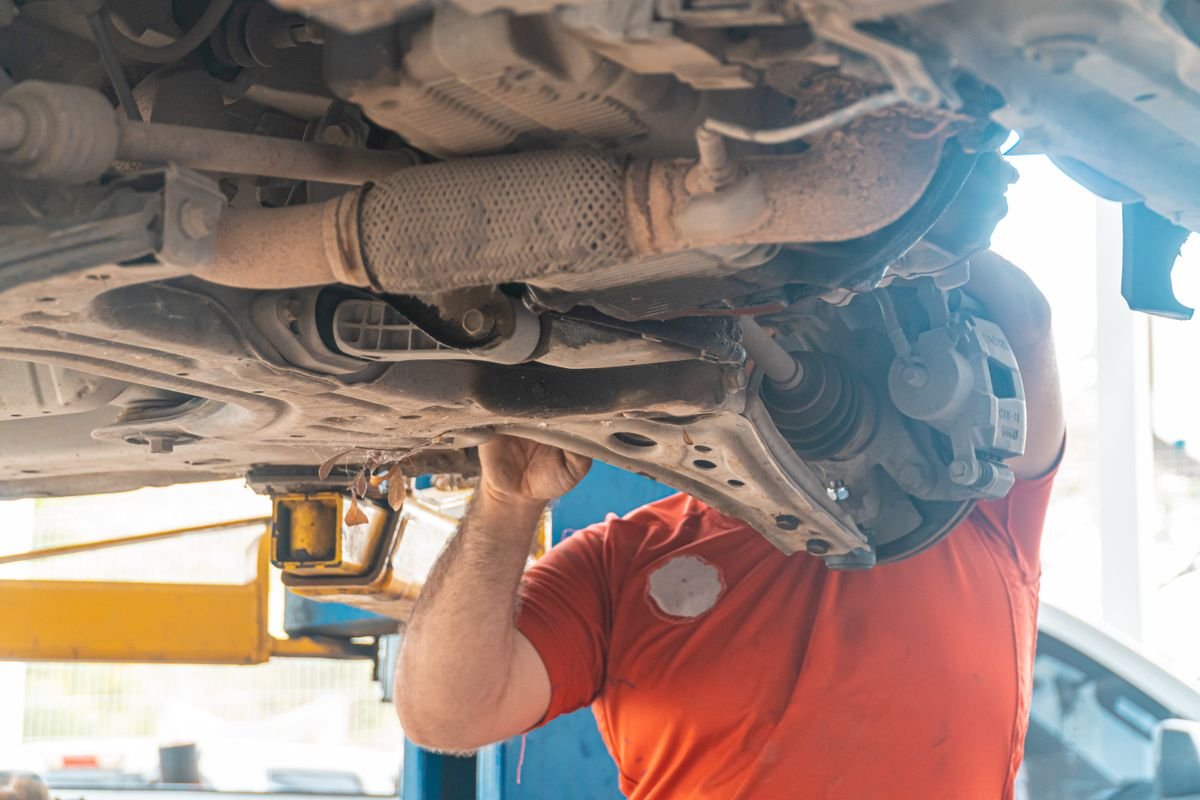
A rubber bushing sits between two metal parts — for example, a control arm and the chassis, or a torque rod and the axle — and acts as a flexible pivot. Instead of metal grinding against metal, the rubber element absorbs shock and vibration while still allowing the controlled range of motion the suspension or drivetrain needs. Done correctly, this keeps ride quality comfortable, protects the surrounding hardware from fatigue, and keeps the vehicle’s alignment stable under load.
Common Rubber Compounds Used in Truck Bushings
Not all rubber is equal, and the compound matters as much as the shape. The right material depends on where the bushing sits and what it’s exposed to:
- Natural Rubber (NR) — excellent elasticity and fatigue resistance, a common choice for general suspension bushings that see constant flexing.
- SBR (Styrene-Butadiene Rubber) — cost-effective with good abrasion resistance, often used in higher-volume, less demanding applications.
- NBR (Nitrile Rubber) — resistant to oil and fuel exposure, making it suitable for bushings mounted close to the engine or drivetrain.
- EPDM — strong resistance to weather, ozone, and UV exposure, a good fit for bushings mounted in exposed underbody locations.
- FKM (Viton) — the highest heat and chemical resistance of the group, reserved for specialty high-temperature applications.
Hardness is measured on the Shore A scale, and most truck suspension bushings fall somewhere in the 40–90 Shore A range. Softer compounds isolate more vibration and noise; harder compounds deflect less under heavy load but transmit more vibration through to the cab. A bushing’s durometer is chosen deliberately for its position — swapping in the wrong hardness can change how a vehicle rides and handles, even if the part physically fits.
Signs a Bushing Needs Replacement
- Clunking or knocking noises over bumps or during acceleration and braking
- Uneven or accelerated tire wear
- Vibration felt through the cab floor or steering wheel
- Visible cracking, splitting, or dry rot in the rubber
- Excessive play when the component is manually levered by a technician
Sourcing the Correct Replacement
Matching a bushing on dimensions alone isn’t enough — the compound, durometer, and metal sleeve tolerances all need to match the original equipment specification for the part to perform and last as expected. Cross-reference systems such as TecDoc, and catalogues from suppliers like DT Spare Parts, Febi, MEYLE, and SAMPA, are the standard tools workshops and wholesalers use to confirm that an aftermarket bushing is a true equivalent to a given OEM part number, rather than just a visual match.
Working directly with a manufacturer that controls its own rubber compounding and metal stamping — rather than through several layers of trading intermediaries — also means tighter batch-to-batch consistency, which matters when a fleet is ordering the same part number repeatedly across multiple vehicles.
If you’re a workshop, wholesaler, or fleet buyer looking to cross-reference a specific bushing part number or request a quote, get in touch with our team — we manufacture rubber and metal suspension and drivetrain components factory-direct for commercial and passenger vehicles.