
Control Arm Bushing Guide: Symptoms & OEM Sourcing
A control arm bushing is one of the most heavily loaded rubber components in a truck’s suspension, yet it rarely gets a second look until the ride turns noisy or the steering starts to feel loose. Because the symptoms overlap with tie rods, shocks, and ball joints, a worn control arm bushing is one of the most commonly misdiagnosed suspension issues on commercial and passenger vehicles alike. Here’s what the bushing actually does, how to spot one that’s failing, and what to look for in a replacement.
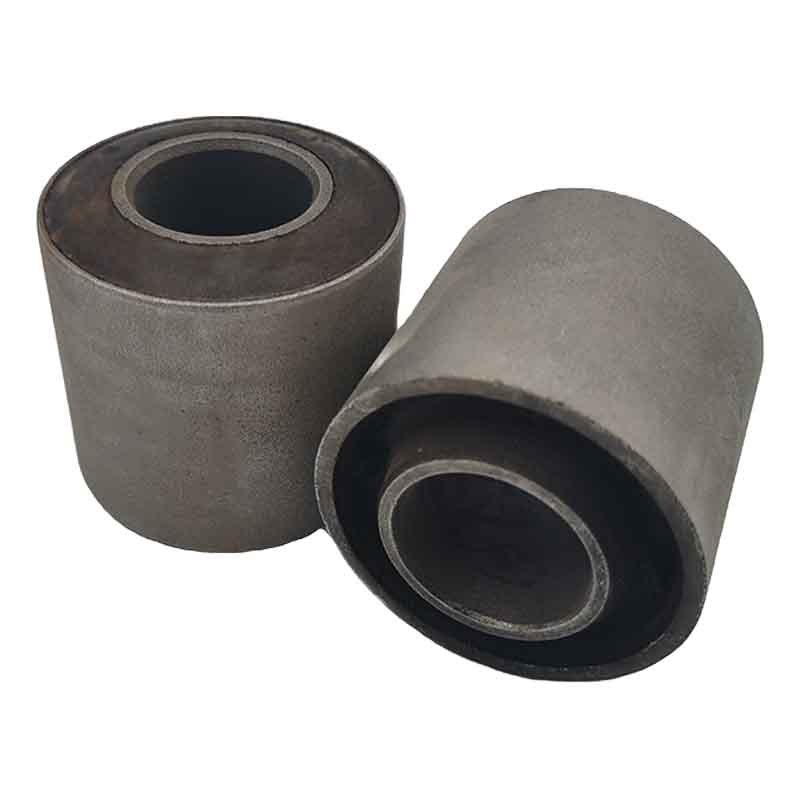
What a Control Arm Bushing Does
The control arm connects the suspension to the frame or axle, and a rubber bushing sits at its pivot point on each end. That bushing lets the arm move up and down through its full suspension travel while isolating road vibration and impact noise from reaching the cab. Just as importantly, it locates the control arm precisely enough to hold camber, caster, and toe within spec — so a worn bushing doesn’t just sound bad, it lets the whole front end move in ways the alignment was never set up to handle.
Common Symptoms of a Worn Control Arm Bushing
- A clunk or knock over bumps and potholes, especially at low speed
- Vague, wandering, or delayed steering response
- Uneven or accelerated tire wear that keeps coming back after an alignment
- Visible rubber cracking, splitting, or separation from the metal sleeve
- A front end that won’t hold an alignment setting for long
Inspection Tips
Start with a visual check for cracked, torn, or perished rubber, then use a prybar to check for excess play between the bushing and its housing — a bushing in good condition should show almost no free movement. It’s also worth checking whether the bushing has rotated or “walked” within its housing, which is a sign the rubber has already partially separated from the outer sleeve even if it hasn’t failed completely yet.
Sourcing OEM-Equivalent Replacements
Matching the outer diameter and bolt pattern is only the starting point — the rubber compound and durometer also need to match the original specification, since a bushing that’s too soft will feel vague and one that’s too stiff will transmit noise straight into the cab. Working with a manufacturer that produces both the rubber and metal elements in-house, rather than sourcing them from separate suppliers, generally means tighter tolerances and more consistent quality across repeat orders.
Need help cross-referencing a control arm bushing part number? Reach out to our team for OEM cross-reference support and a factory-direct quote.